Preserved moss wall art: how green accents shape a restful home
Adding greenery to a room is one of the most direct ways to make it feel calm and alive. But not every space gets enough light for a thriving houseplant, and not everyone has the time for regular watering. This is where preserved moss artwork offers a practical and beautiful alternative. It brings the texture and color of living plants into a room without the maintenance, and it can stay looking fresh for years.
The idea behind preserved moss wall art is simple: real moss is treated so that it no longer needs water, soil, or sunlight. It remains soft and pliable, and it keeps its natural green tones. Because the moss is no longer alive, it will not grow or change shape. This makes it a reliable element in interior design, one that can be placed in low-light corners, behind glass, or on walls where a potted plant would struggle.
What preserved moss artwork actually is
Preserved moss is real moss that has been harvested, cleaned, and then treated with a plant-based solution. The treatment replaces the natural moisture in the moss with a glycerin-based liquid that keeps the cells flexible and prevents them from drying out and turning brittle. A gentle dye is often added to restore or enhance the green color, because the preservation process can sometimes fade the original shade. The result is a material that looks and feels very close to fresh moss but requires no light, water, or fertilizer.
This preserved material can be mounted onto a backing board, arranged into patterns, and framed or set into panels. The final piece is a three-dimensional wall decoration that offers the tactile quality of a living plant wall without the need for irrigation, trimming, or replacement. Because the moss is not growing, it will never become overgrown or lose its shape. That predictability is one reason designers use it in spaces where a living wall would be impractical, such as hallways, bathrooms with no windows, or offices without natural light.
How preserved moss contributes to a restful atmosphere
The connection between natural elements and mental wellbeing is well documented. Biophilic design, a principle that seeks to bring the outdoors inside, argues that humans feel more relaxed and focused when they are surrounded by natural shapes, textures, and colors. A preserved moss wall accent taps directly into that idea. Its soft, irregular surface contrasts with the hard lines of furniture and screens, and its green tones sit comfortably within a calming color palette.

There is also an acoustic benefit. Moss is porous and has a slightly sound-absorbing quality. In a room with hard surfaces such as tile or hardwood floors, a panel of preserved moss can help reduce echo and soften the overall sound. This makes the space feel quieter and more intimate, which supports a restful mood.
From a visual standpoint, moss adds depth to a wall. Unlike a flat paint color or a printed poster, preserved moss has texture that catches light at different angles. The effect changes slightly throughout the day as the sun moves, giving the wall a subtle sense of movement. That gentle variation is more soothing than a static surface, and it can make a small room feel larger by drawing the eye into the detail of the material.
Where to place preserved moss wall art in a home
The most common location is an accent wall. A single large panel behind a sofa or bed creates a focal point without the busy look of a gallery wall. Because the moss is naturally muted in tone, it does not compete with other colors in the room. It works well against white, beige, or gray walls, and it can also complement darker shades like charcoal or deep navy.
Another popular spot is a hallway or entryway. These areas often lack the light for a plant and can feel a bit sterile. A preserved moss piece brings warmth and a touch of nature as soon as someone steps inside. In a bathroom, the moss can handle the humidity as long as it is not exposed to direct water spray. The preserved material is not harmed by moisture in the air, which makes it a good fit for steamy spaces where a living plant might get too wet or too little light.
For those who want a less permanent arrangement, preserved moss can be placed inside a shallow frame or on a lightweight board that can be moved like a painting. This flexibility allows the owner to change the layout of a room without committing to a fixed wall installation.
Botanical wall decor as a design tool
When thinking about interior styling, botanical wall decor is often seen as a finishing touch rather than a structural element. But preserved moss artwork is more than just a decoration. It can act as a bridge between the organic and the built environment. In a room with modern furniture and clean lines, the irregular, fluffy shape of the moss softens the edges. In a rustic or bohemian space, it reinforces the natural material palette without adding clutter.
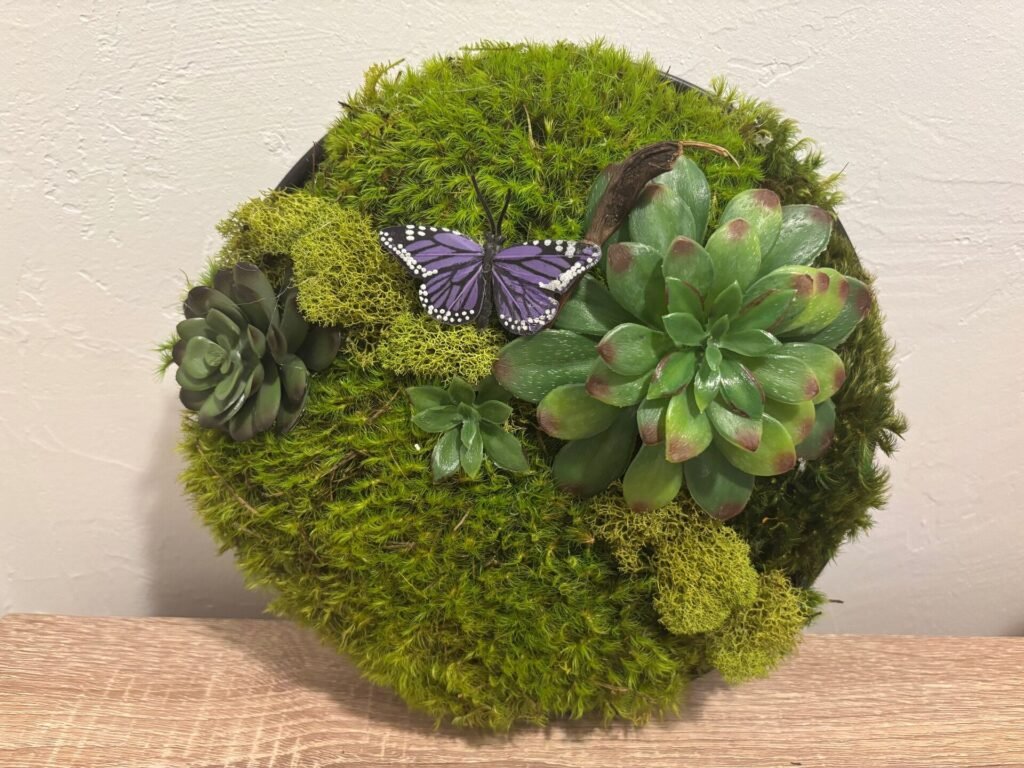
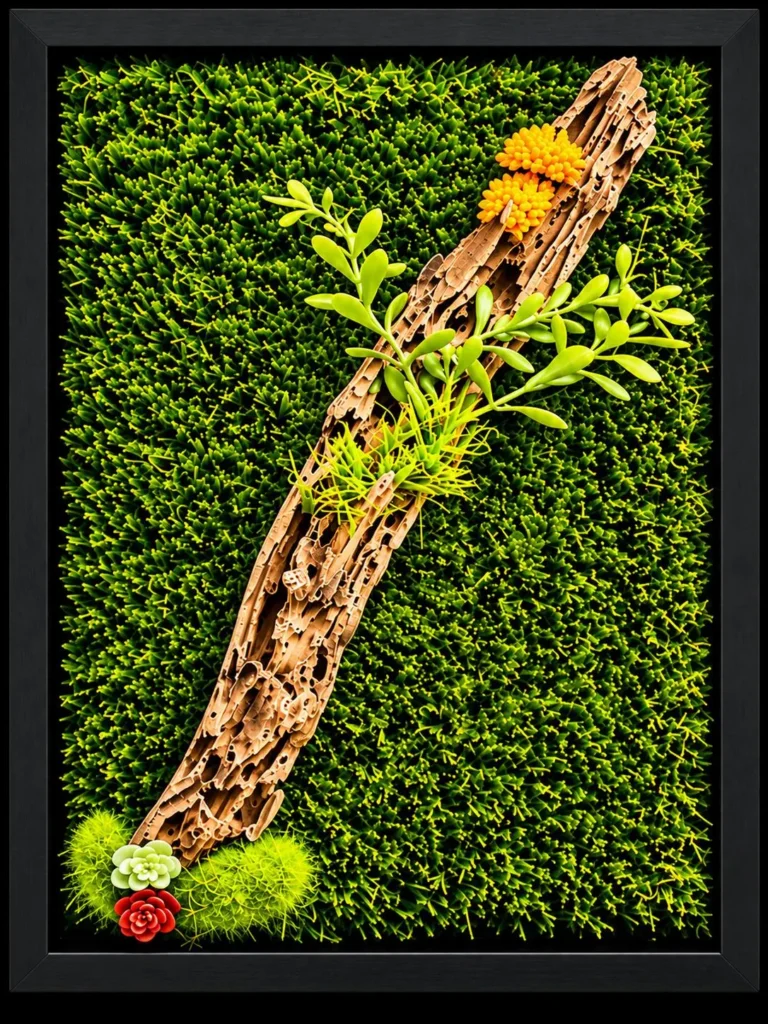
The key is to treat the moss as a texture first and a color second. Many preserved moss pieces include other natural materials such as birch bark, lichen, or dried ferns. These combinations add layers of visual interest and prevent the wall from looking like a single flat patch of green. The variety of tones within the moss itself, from bright lime to deep forest green, gives the designer room to match or contrast with the room's existing color scheme.
Another important factor is scale. A small piece of preserved moss can serve as a subtle accent, while a large panel can cover an entire wall section. In both cases, the moss should be placed at eye level or slightly above, so that its texture is fully visible. If it is mounted too high, the detail is lost and the effect becomes just a dark shape on the wall.
Practical considerations for selecting preserved moss artwork
Quality varies among preserved moss products. The best pieces use whole moss that has been carefully cleaned and preserved, rather than ground moss that is pressed into a sheet. Whole moss retains its natural three-dimensional structure and feels soft to the touch. Sheet moss, by contrast, tends to be flat and less interesting to look at.
The preservation process should also be free of harsh chemicals. Most high-quality preserved moss uses a glycerin-based solution that is safe for indoor use. Some cheaper alternatives may use dyes that fade quickly or preservatives that give off an odor. A preserved moss piece should not smell strongly of anything; if it does, that is a sign of poor processing.
Sunlight is the main enemy of preserved moss. Direct sun will cause the color to fade over months or years. The piece should be placed on a wall that gets indirect or filtered light. If the room has large south-facing windows, it is better to put the moss on a wall perpendicular to the windows rather than directly opposite them. Ultraviolet rays from direct sun can break down the dye even in well-preserved moss.
Dust accumulates on moss just as it does on any surface. A gentle cleaning with a soft brush or a hairdryer on a cool, low setting will keep the moss looking fresh. Water should never be used, because it can cause the preservation solution to leach out or encourage mold on the backing material. With these simple precautions, preserved moss artwork can stay attractive for many years.
Why texture matters in a restful home
A room that feels restful is often one with a variety of textures. Smooth surfaces like glass and polished wood can feel cold if they dominate. Adding soft, fibrous, or irregular textures changes the sensory experience of the space. Preserved moss supplies that tactile contrast in a way that is both visual and physical. Even if a person never touches the moss, the eye registers its softness and reads the room as more comfortable.
This is particularly valuable in bedrooms and living rooms, where relaxation is a priority. A preserved moss accent wall can replace the need for throw pillows, blankets, or rugs to add softness. It is a fixed element that does not need fluffing or rearrangement, and it provides a consistent calming presence.
Pairing preserved moss with other natural materials
For a cohesive look, preserved moss works well with wood, stone, and linen. A wooden frame or a live-edge shelf above a moss panel reinforces the natural theme. Stone or concrete walls, which can feel harsh, are softened by the presence of moss nearby. The contrast between rough stone and soft moss is visually appealing and emphasizes the organic quality of both materials.
Lighting also plays a role. A small spot light or a picture light aimed at the moss will bring out its texture and color in the evening. Ambient light from a floor lamp or sconces is less effective because it spreads too evenly and does not create the shadows that show the depth of the moss. Directional lighting, even from a simple clip-on fixture, makes the moss come alive after dark.
Botanical wall decor of this kind does not have to stand alone. It can be combined with a few potted plants, a small fountain, or a tray of stones to build a small indoor landscape. The key is to keep the arrangement simple. Too many competing elements defeat the restful purpose. A single preserved moss panel, lit softly and surrounded by neutral colors, often does more for a room than a crowded shelf of plants and ornaments.
For anyone looking to bring nature indoors without the upkeep of live plants, preserved moss artwork offers a durable and attractive solution. It provides the calming effect of greenery, the visual interest of texture, and the peace of mind that comes with knowing the piece will not change or need constant attention. That combination is what makes it a genuine tool for restful home design.